I'm here to change the culture of mental health care by proving you don't have to abandon yourself to stay connected to your people — in the field that trained us, or in the families we come from.

I was years into a Ph.D. in counseling psychology—studying trauma, providing care for it, and teaching other people how to recognize it—before I realized I was carrying my own.
I'd like to tell you that's rare, but it isn't.
We can become experts at understanding other people while remaining disconnected from the stories shaping us.
I was trained to recognize trauma.
I still didn’t recognize my own.
There was nothing on the shelves for this
Growing up, my father owned a pharmacy serving Korean immigrants in our community.
People came in for their prescriptions and stayed to talk to my mother. I'd watch their shoulders drop as she listened–something in them loosened simply because someone had made room for their stories.
But then they returned to the same lives that were hurting them.
I was too young to name what they needed. I only knew it wasn't on any of our shelves.
The painful part?
My mother could create that for strangers, but she couldn’t create it for me.
I thought it was “just my family”
My mother and I fought throughout my childhood. Over time, I lost my voice in those conflicts—figuratively and literally.
But I didn’t call it trauma. It was just my family, and other people had it worse.
Repairing our relationship required my own therapy, learning enough Korean to have conversations we had never been able to have, and years of repetitive boundaries.
It wasn’t fast or fair. But my mother changed.
So did I.
Developmental trauma doesn’t always announce itself. Sometimes, it becomes the person you think you are.
“I’m too sensitive.”
“I’m bad at relationships.”
“I should be able to handle this.”
What if you’re not broken? What if you adapted?
In my family, I learned to silence my needs to preserve the relationship.
I stopped trying to become more acceptable.
I started becoming more myself.
As I confronted the trauma in my family, I found my voice and built a different relationship with my parents—one that didn’t require me to keep abandoning myself.
That freedom became the foundation of my work.
The root work.
I help people uncover the parts of themselves they learned to hide, understand what made hiding necessary, and build new ways of caring, healing, and connecting.

Areas of Expertise
Specializations:
Trauma concerns (family-of-origin issues, sexual abuse, racial trauma)
Asian and Asian American Pacific Islander mental health
BIPOC (Black, Indigenous, and Other People of Color) mental health
Anxiety, depression, and other mood disorders
Therapists, practitioners
Immigration/acculturation stress
Relationship concerns
Identity issues (increasing self-awareness and authenticity)
Career counseling- career dissatisfaction
Experience Working With:
Ethnically/racially diverse client populations
Sexually and gender diverse clients (LGBTQIA+)
Couples/relationship concerns (i.e., interracial couples, couples in open relationships)
Postpartum concerns

PROFESSIONAL WORK EXPERIENCE
Gloria Huh Counseling, PLLC, Seattle, WA, 2023 - Present
Owner, Licensed Psychologist
Interconnections Healing Center, Seattle, WA, 2019- 2022
Licensed Psychologist
George Mason University, VA, 2017-2019
Staff Psychologist
Adjunct Faculty
Counseling and Mental Health Center, UT Austin, TX, 2015-2016
APA-accredited Doctoral Intern
EDUCATION
University of Maryland College Park, 2017
Ph.D. & M.A. in Counseling Psychology
University of Pennsylvania, 2008
M.S.Ed. in Counseling & Psychological Services
Lehigh University, 2004
B.A. in Psychology
Podcast!
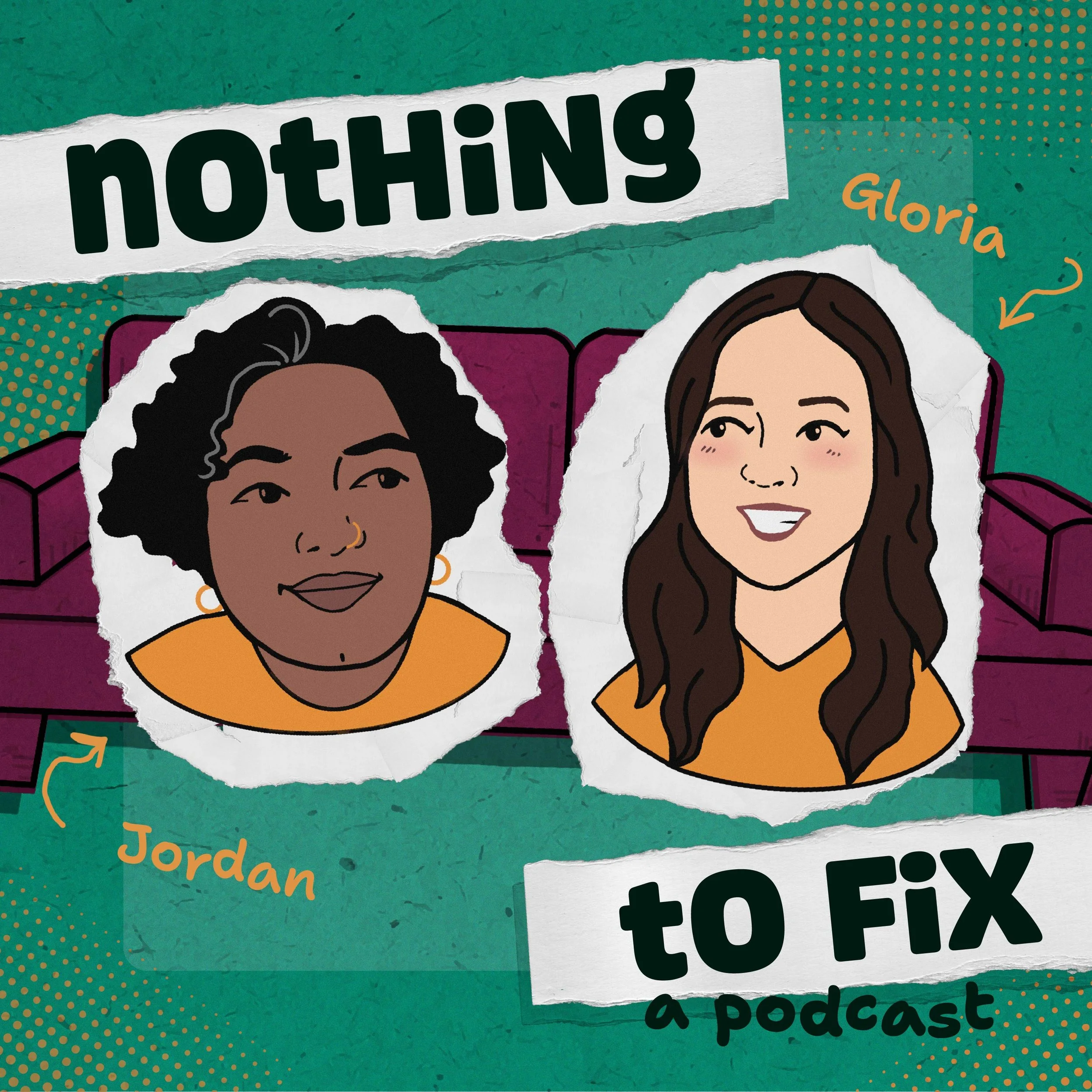
Check out my podcast, Nothing to Fix, with co-host, Jordan Alam!
Two writers, theory nerds, and yes— psychotherapists—talk about the messy, contradictory nature of healing.